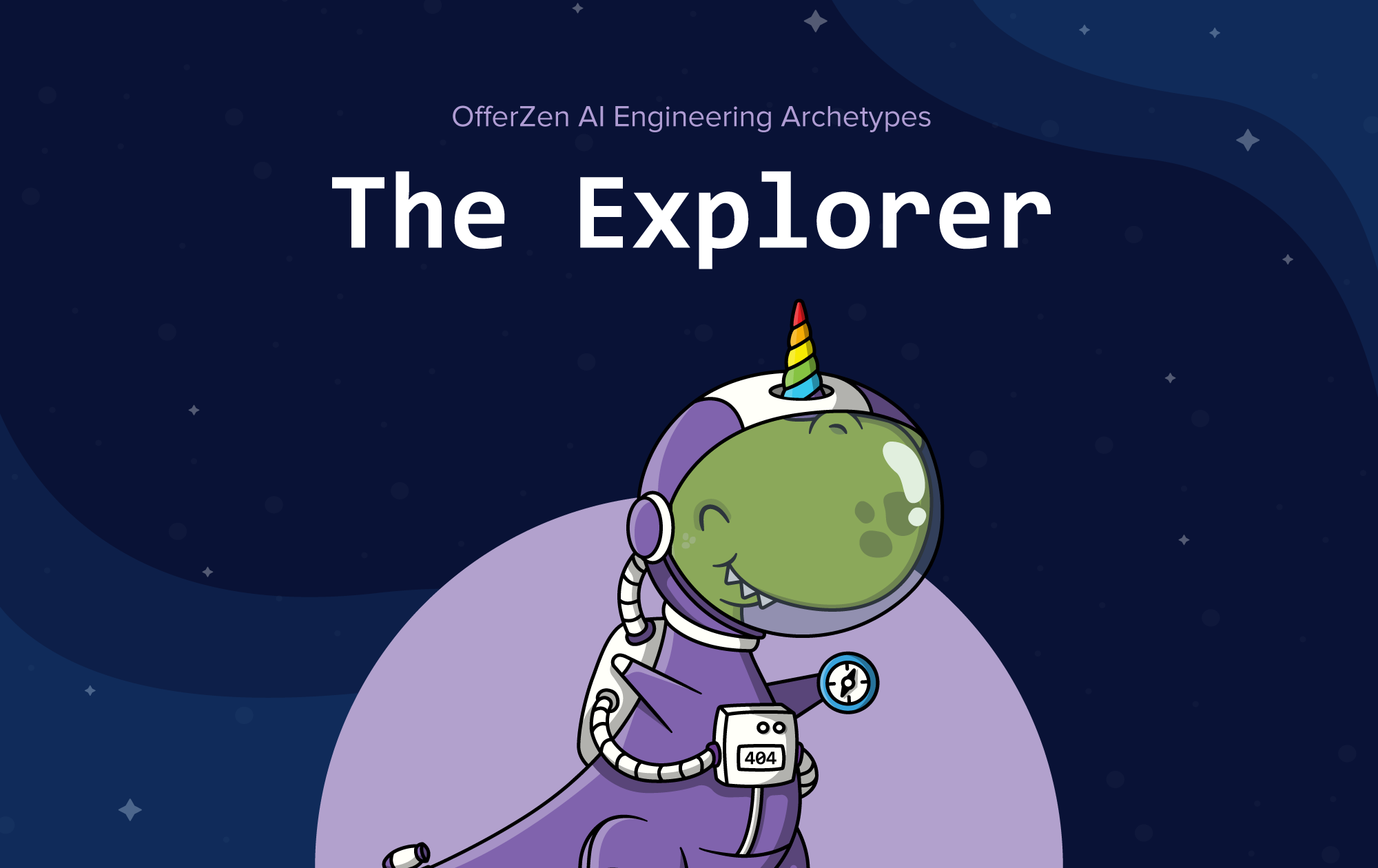
You're an Explorer
You don't need to be the person building every system. You're the person who can navigate them confidently enough to unblock conversations, answer questions faster, and keep the team focused on deeper work.
What this means
A stakeholder sends a message at 9am: 'How does the refund flow actually work?' Six months ago, that question sat in a developer's queue until someone had twenty minutes to explain it. Now you pull up the codebase, spend fifteen minutes with AI walking you through it, and have a clear answer before the standup.
Getting answers about how your product actually works used to mean going through a developer. You'd ask, wait, get an explanation that was either too shallow or too detailed, and make your decision on incomplete information. The information existed, but getting it properly took time nobody had.
AI changes that. With the right setup and a bit of curiosity, you can now get well-informed answers directly, without pulling anyone away from their work to get them.
What you actually do
- Use AI agents and MCPs to get codebase summaries and understand how features are built, without needing to read the code yourself.
- Investigate bug reports and answer business queries independently, so developers aren't the first point of contact every time someone outside the team needs technical context.
- Translate technical findings into stakeholder-friendly communication: the kind of explanation that gives decision-makers what they need without pulling them into implementation detail they'll struggle to use.
- Ship small fixes when the system makes it possible: a copy change, a typo, a minor config update. Shipping code is not your core job, but when the tooling is set up well enough that you can handle something without pulling anyone in, you do.
- Reduce context shifts for the engineering team by taking ownership of enablement tasks that previously required a developer to stop what they were doing.
What you don't do
- Ship code as a core part of your role. If regular code delivery is expected of you, that sits in Builder or Artisan territory, and the expectations around your work should reflect that.
- Replace developers. Your role is to support and enable the team, and the value you add depends on there being a capable engineering team around you.
- Overstate your technical conclusions. The Explorer's credibility comes from honest engagement with systems, and the quickest way to lose it is to present AI-generated explanations with more confidence than the situation warrants.
How you use AI
AI is your interface to the technical world: you use it to ask questions, get explanations, access systems through whatever tooling your team has set up, and occasionally point it at a task small enough to run autonomously.
What you're checking for is different from a developer's, because you're not reviewing code quality or tracking diff sizes. You're asking whether the answer makes sense given what you already know about the product, and whether you've genuinely understood it or just received it. That distinction is the whole game.
Where you shine
- Bug investigation: taking a report from "something is broken" to a clear description of what, where, and likely why, without a developer having to spend an hour on initial triage.
- Stakeholder communication: bringing real technical understanding into conversations rather than relaying second-hand explanations you half-understood yourself.
- Answering "how does X work?" questions that would otherwise sit in someone's queue until they had bandwidth to respond.
- Minor fixes that are genuinely annoying but don't justify pulling a developer away from more complex work.
Your blind spots
- AI produces fluent answers whether they're accurate or not, which means the Explorer's biggest risk is mistaking a confident explanation for a correct one. And if you're consistently finding the output unreliable, that's worth raising with your Multiplier. It's usually a sign the environment, documentation, or systems need improvement, not just a personal habit you need to work around.
- The more capable you become as an Explorer, the more tempting it is to feel pulled toward larger feature work. But there's an important distinction between building product features yourself and improving the environment around the team through better workflows, tooling, or AI-assisted approaches. The first creates short-term output, often at a higher time and energy cost than expected. The second creates leverage for the whole team.
- Defending your worldview is healthy, but it has a shadow side. When an Artisan or developer questions your technical conclusions, the right response is genuine curiosity rather than defensiveness. Engaging with a system through AI doesn't make you immune to misreading it.
Where you might be heading
Explorers who deepen their technical understanding over time, moving from knowing what a system does to understanding how it works, often start growing toward Builder territory. The judgement and product instinct that make a strong Explorer are the same foundations Builders rely on.
Others move toward something closer to Artisan, developing deep expertise in a specific domain and learning how to direct AI with real precision instead of broad curiosity. The code authorship may still be absent, but the depth of understanding changes the quality of the output.
Neither path is required. Some of the most valuable people stay firmly in the Explorer archetype and simply become exceptionally good at it. Teams will always need people who can bridge the technical and non-technical worlds, and that role only becomes more valuable as AI matures.
Explore the other archetypes
Not sure this one fits? Read about the others and see what lands.
- The Multiplier: Makes everyone around them faster. Uses AI to think bigger: prototyping patterns, setting guardrails, and extending team capability instead of just personal output.
- The Builder: Treats AI as an execution engine. Operates one level up from code, steering agents rather than writing syntax.
- The Artisan: Leads AI moment-to-moment because default output isn't good enough in their area of depth. Stays close to the code and catches drift early.
- The Apprentice: Co-creates with AI through dialogue. Builds judgement one prompt at a time, and ships only what they can defend.
Or go back to the AI Engineering Archetypes overview to see the full picture.